
FAUXTOGRAPHER VS. PHOTOGRAPHER — PART II
A 360ism Network series on photography, technology, and professionalism, and what happens when looking professional becomes easier than becoming one. Part I, Professional Is an Occupational Title, defined the word professional. This installment defines the word the series is named for.
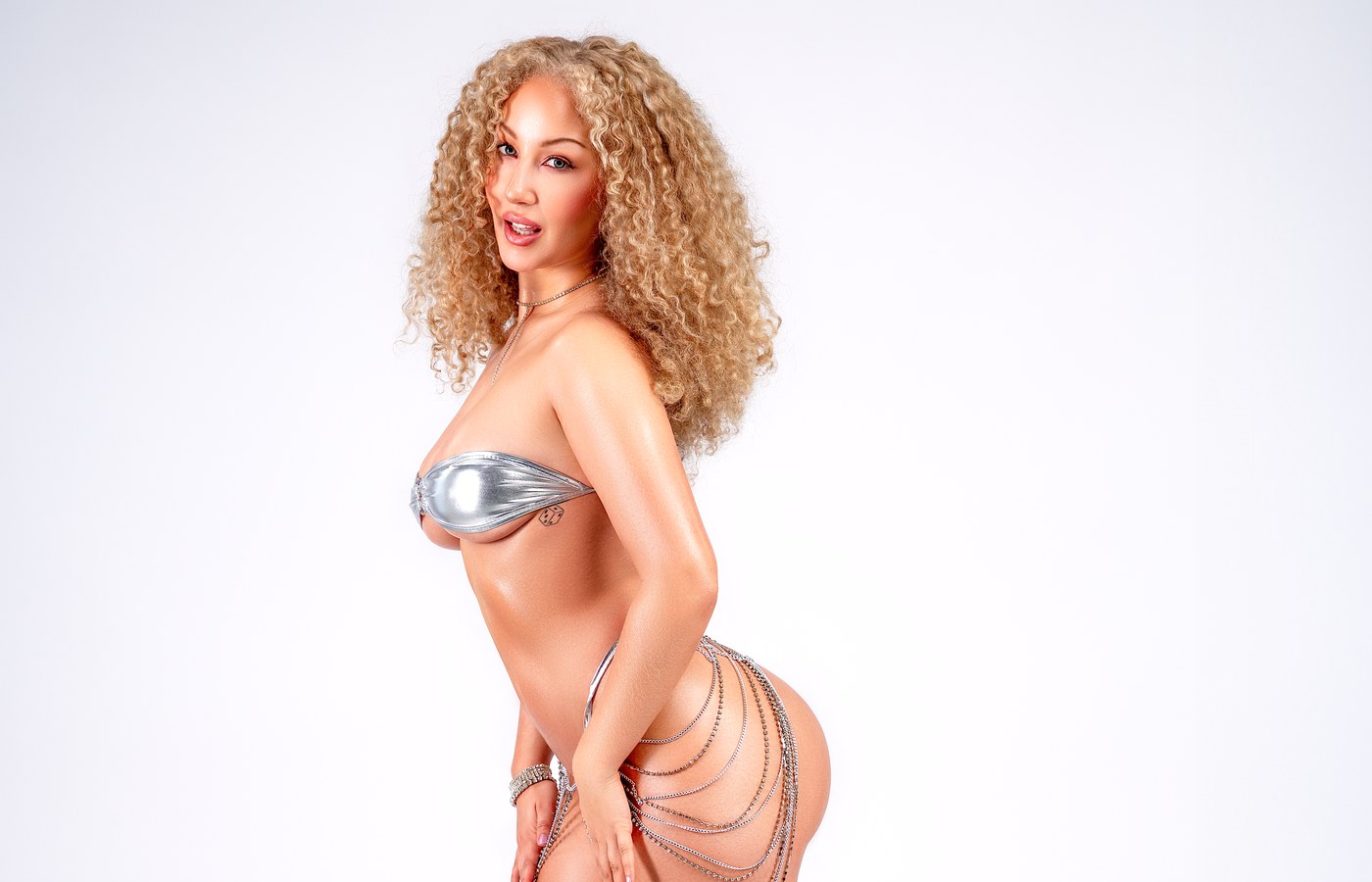
Kylie The Bunny. Photograph by Daring Leaderman.
A fauxtographer is a person whose professional presentation exceeds their professional capability or practice. That’s the whole definition. It says nothing about talent, price, equipment, or how long the person has held a camera.
The word is a blend of faux and photographer. It has been common slang among working photographers for well over a decade, and it circulates as an insult. Other people have written about it before, and this series isn’t connected to any of them. Here the word is used as a category, not a slur. An insult describes a person. A category describes a gap, and a gap can be measured.
One thing to settle before going further. This isn’t a piece about bad photographers, and it isn’t written from above. Every photographer working today started with less than they have now, and most presented themselves as slightly more than they were at some point along the way. The subject here isn’t ambition. The subject is what happens when the appearance of a profession becomes the product.
Who the fauxtographer is not
Part I laid out a set of titles: enthusiast, advanced, emerging, paid freelance, part-time professional, career professional. The fauxtographer isn’t a seventh title. The fauxtographer is a mismatch between the title claimed and the title earned.
Not a beginner. A beginner is learning and knows it. The beginner’s website, if there’s one, says so. There’s nothing faux about a person at the start of the road who describes the road accurately.
Not a hobbyist. Some of the most technically capable photographers I’ve met have no interest in making photography their occupation. They shoot what they want, when they want, for nobody. They aren’t misrepresenting anything, because they aren’t representing anything.
Not necessarily a weak photographer. This is the part people miss. A fauxtographer can make a beautiful image. The gap is often not in the image at all but in everything around it: the contract, the delivery, the backup, the ability to repeat the result on a day the conditions aren’t chosen.
Not a stage. Beginner and emerging are stages. Fauxtographer is a posture. A person can hold the posture for twenty years, and a person can drop it in an afternoon by changing one word on a bio.
The term describes the misrepresentation, not the skill level. There are beginners with more integrity in their presentation than some photographers with two decades of bookings.
The two machines that made the gap possible
The fauxtographer isn’t new. What is new is how easy the posture has become to hold. Two developments did most of the work.
The camera got smarter, and the photographer didn’t have to. Autofocus tracks an eye across a frame. Exposure automation gets close enough on the first attempt. Flash metering does the arithmetic. A preset lays a recognizable look over a file in one click, and software now repairs missed focus, blown highlights, and skin in ways that would have been unthinkable when I was shooting for a newsstand. None of that’s a complaint. Those tools make my own days shorter. But they lowered the technical floor for producing an attractive photograph without lowering the floor for understanding why the photograph works. A person can now produce a frame they can’t explain. That was much harder in 2009.
The portfolio became a highlight reel. A portfolio used to be a book you carried into a room, and an art buyer would flip through it and ask questions. A social feed is a stream of best frames with no questions attached. Twenty strong posts tell a viewer twenty things about twenty moments. They tell the viewer nothing about the other four hundred frames from those sessions, or about the sessions that produced nothing worth posting, or about the client who never received the files. The feed isn’t dishonest. It’s incomplete in a direction that favors the poster, and the fauxtographer lives inside that direction.
Put the two together and the recipe writes itself. Buy a capable camera. Learn one lighting setup that flatters most people. Apply one preset. Post the five best frames from every session. Add the word professional. From the outside, that’s indistinguishable from a working practice, and for a while it may even function as one.
What a session looks like
Here is one of mine.
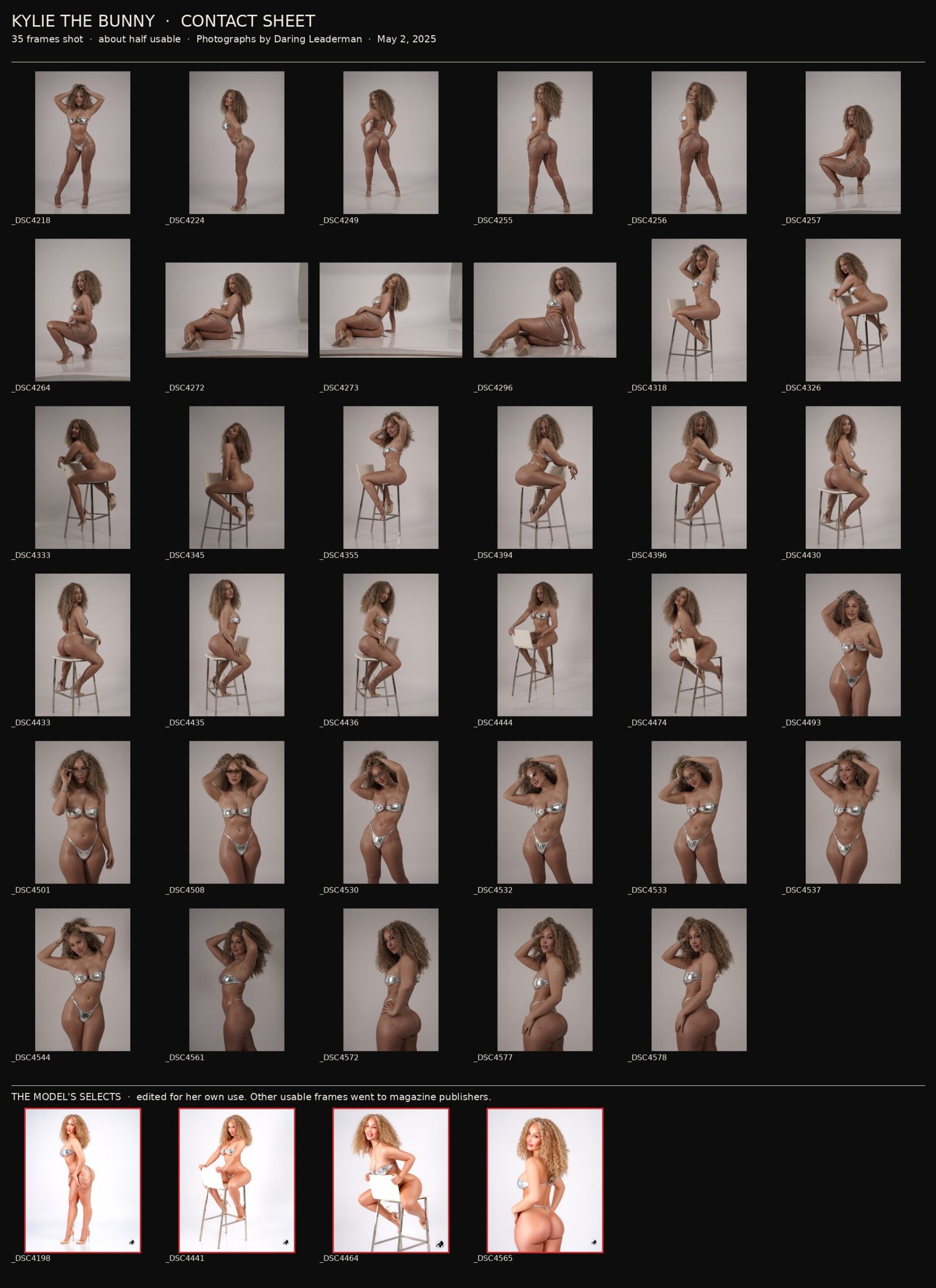
Thirty-five frames on the sheet. The four outlined at the bottom are the ones the model chose for herself. Those are the frames a viewer would see on a feed, and they would look like a session that went exactly as planned.
The sheet shows the part the feed hides, and it isn’t a graveyard. About half of those thirty-five frames are usable: in focus, well exposed, the pose resolved, the light where it was put. The model’s four weren’t the only frames that worked. A separate set from the same usable half went out to magazine publishers, who wanted different frames for different pages. One hour of shooting, one sheet, and two clients served from it with no overlap. The misses on the other half are cheap ones: a hand that fell wrong, a chair angle that flattened the line of the body, a frame that was fine and not better than the one beside it. Three setups, one stool, one seamless, and a subject who knows how to work.
Nothing on that sheet is embarrassing. That’s the point. I walked in expecting at least half the frames to be usable, and that’s what came out. A professional session isn’t a session with no misses. It’s a session where the usable rate is known before the first frame, the selects come from a pool rather than a rescue, and there’s enough in the pool that the model and the publishers can each take what they need.
The fauxtographer’s feed shows four frames. The fauxtographer’s sheet, if one existed, is the unknown. Sometimes it looks like mine. Sometimes it’s three hundred frames with four survivors, and the four were rescued in software, and there was nothing left for a second client. From the feed, nobody can tell. From the sheet, anybody can.
The business half of the gap
Part I said clients are paying for what surrounds the shutter. That’s where the fauxtographer is most exposed, because the surroundings don’t show up in a feed.
A photographer can make a beautiful image and still run the practice like an amateur. No contract, or a contract copied from a forum and never read. Delivery dates that slide. No backup, so one drive failure ends a client relationship. Pricing that changes with mood. Messages answered when convenient. No idea what a usage license is or why a commercial client is asking about one.
None of that’s visible in the work. All of it’s visible to the client, usually after the deposit has cleared. This is why the fauxtographer is a business problem before it’s an aesthetic one. The images may be fine. The experience of hiring the person is not, and the gap between the two is exactly the gap the title was supposed to close.
The test
The test takes an evening, and it isn’t about the pictures.
Pull the last five paid sessions. For each one, find the signed agreement, the delivery date promised and the date the files actually went out, the location of the raw files today, and the license terms the client received. If all four exist for all five sessions, the presentation is backed by practice, whatever the pictures look like. If two or more are missing on more than one session, the title on the bio is ahead of the business behind it.
Then pull the contact sheet from the most recent session, all of it. Count the usable frames. Divide by the total. My working floor is half. If the number surprises you, the feed has been doing your thinking.
What to do this week
Don’t rebuild the portfolio. Build one contact sheet. Take the most recent session, export every frame at thumbnail size, and lay them out on one page with the selects marked. Look at it once as the photographer and once as a client who has been handed it.
Then do the smaller thing, which is harder. Read the bio on your own site and remove any word the sheet doesn’t support.
That’s the difference between the two words in this series. A photographer is defined by what the sheet shows. A fauxtographer is defined by what the feed leaves out.
Part III: The Professional Photographer Is a Problem Solver. What the title looks like from the inside, and why the room, the light, and the equipment are the smallest part of it.
3 comments
Sign in or join free to leave a comment.