
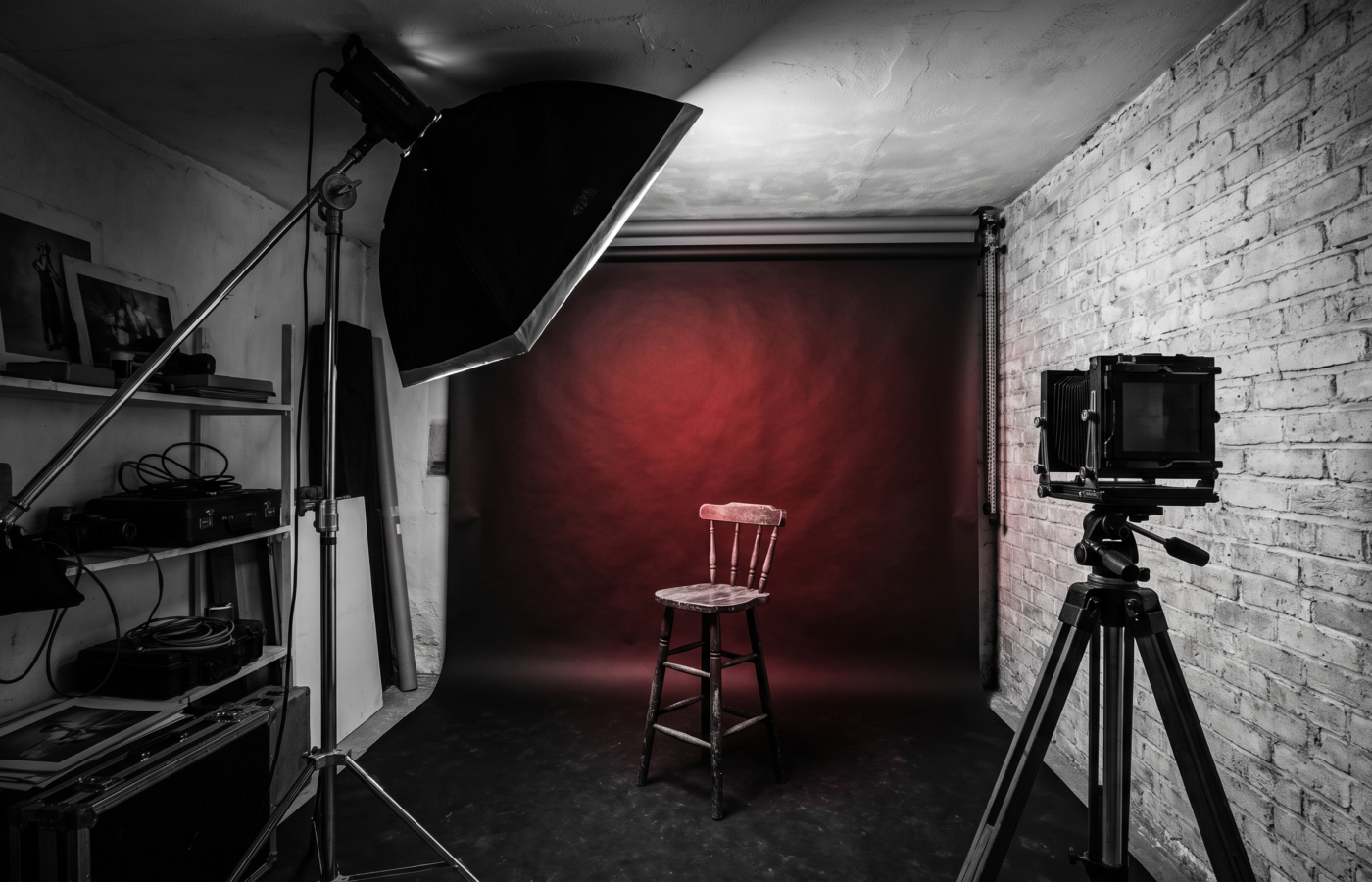
The room, the people, and the feedback around you decide what feels normal. At some point, normal stops being enough.
I recently met a few photographers who were new to me, although they were already well known in the community. Their work was imaginative, visually engaging, and easy to appreciate. I could see why people liked it.
Looking at that work also made me think about the difference between having a strong creative instinct and developing a deeper command of photography. A finished image can’t tell you everything about how much a photographer knows. But it can raise questions about what they control, what they repeat, and where they might still have room to grow.
That brought me back to something I’ve noticed over the years: the environments where we shoot can influence how far we develop.
Sometimes an environment helps us find our voice. Sometimes it becomes so comfortable that we stop asking more of ourselves.
When Liking the Result Stops Being Enough
One of the freedoms of being a newer photographer is that you don’t know what you don’t know. What you do know is what you like. You see something interesting, you make a picture, and you respond to the result. That instinct has value. It gives you permission to experiment before you’ve learned all the reasons someone might tell you an idea won’t work.
I’d never want photographers to lose that.
But there can come a point when liking the result stops being enough. You begin wanting to understand why it worked, how to make it work again, and how to change it when your vision calls for something different.
That’s what happened to me.
My dissatisfaction grew as I developed a clearer vision for where I wanted my work to take me. I started seeing inadequacies in photographs I had once felt good about. My expectations had changed. The standard I had accepted before was no longer enough for the work I wanted to create.
Once I saw those gaps, I had to learn how to address them.
What I Mean by Environment
That’s where your environment begins to matter in a different way. By environment, I mean more than the room. I mean the people you photograph, the photographers you work alongside, the feedback you receive, and the studios where you spend your time. Together, those things help establish what feels normal, what earns praise, and what you believe is possible.
If the people around you keep responding positively to the same kind of work, it’s easy to keep making it. If everyone approaches lighting in roughly the same way, you may have little reason to question that approach. If a studio makes certain photographs easy to produce, you may keep returning to those photographs without noticing how narrow your habits have become.
You can stay busy, stay creative, and still stop developing parts of your craft.
The Room Has Requirements
There’s also a physical side to this that deserves more attention.
When I was working for the federal government, one of the photographers there told me about a man whose responsibility was to make sure studios across an organization met an internal studio regulation guide. As she described it, the studios had requirements for size, depth, equipment, and other features needed for photography and video production.
What stood out to me was that someone had a role dedicated to making sure those environments met the requirements for the work.
Those were specifications for that organization’s production needs. Different studios serve different purposes and will need different configurations. But the principle matters: the suitability of a production space deserves deliberate attention.
A room’s depth affects where you can place the camera, subject, and background. Its ceiling height affects where you can place lights above a subject. Its width affects how freely you can position equipment around the scene. When video is part of the work, sound becomes another part of the environment you have to consider.
Those conditions influence the choices available to the photographer. They can help you execute an idea, or they can force you to change it before you’ve even begun.
You can be resourceful and produce a good photograph in a difficult room. Resourcefulness is part of the craft. But getting a photograph to work in a space doesn’t establish that the space works well as a studio.
You can create in any space. That doesn’t make every space a good photography studio.
A small room may work very well for a carefully planned headshot setup. The same room may become impractical for full-length portraits, groups, or a production that requires more equipment and movement. A larger room can also be poorly arranged. The useful question is whether the space supports the work it’s intended to accommodate.
That’s where advice such as “you don’t need a big space to make a studio” needs context. It may be perfectly useful advice for a photographer building a setup for a specific purpose. Problems arise when someone overlooks that purpose and assumes the same arrangement will support a much broader range of work.
For a photographer who’s still learning, the limitations may be hard to recognize. They may spend every session adapting to the same ceiling, the same cramped camera position, or the same lack of separation between subject and background. Over time, those compromises can become their normal way of shooting.
They may believe they’ve explored studio photography when they’ve mainly explored what one room allows.
That’s another way an environment can shape your development. It can narrow the techniques you practice and the ideas you attempt before you understand how much more is possible elsewhere.
What You’re Actually Renting
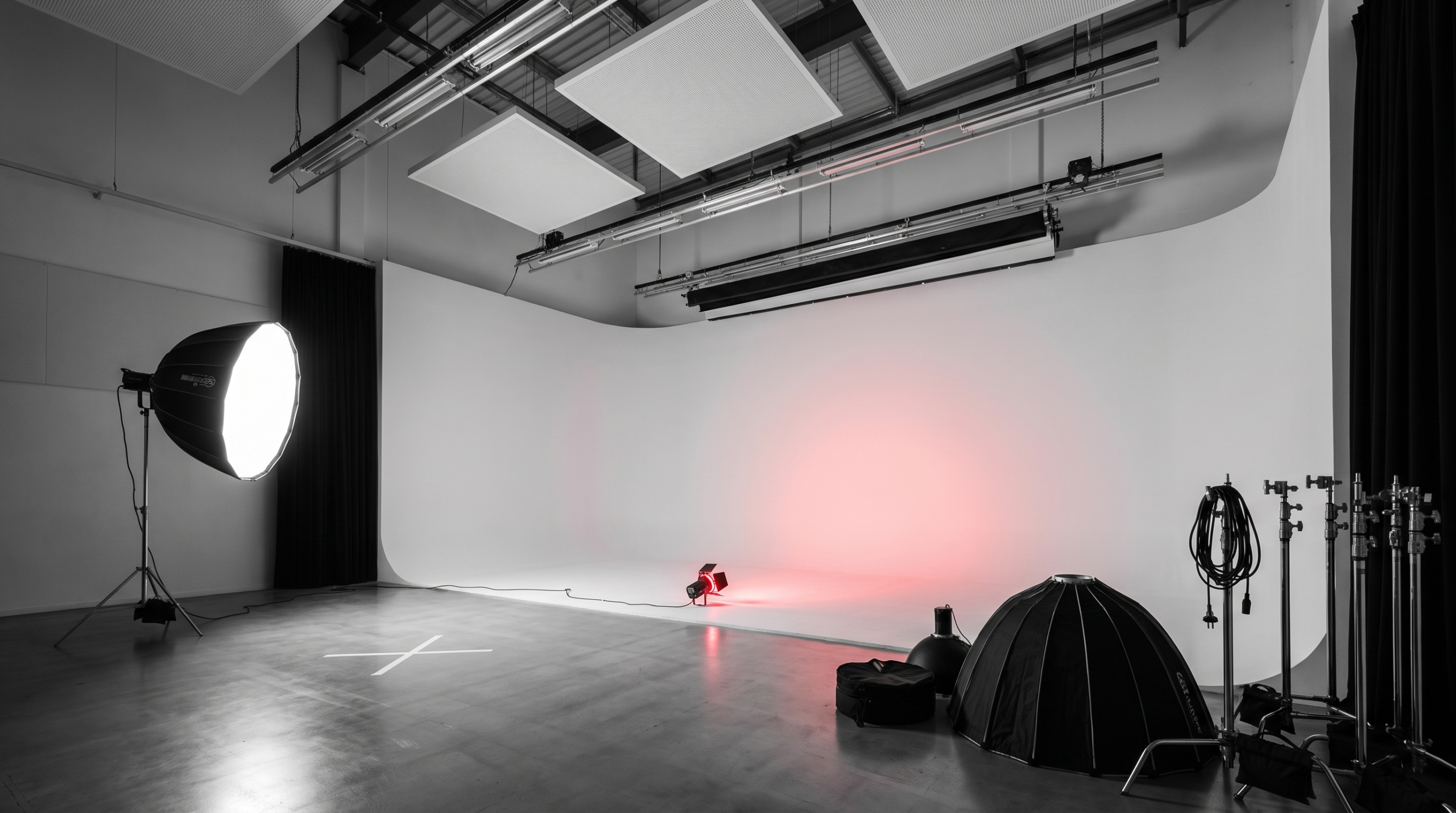
Rental studios are a useful example. In Richmond, I’ve seen attractive spaces with plenty of amenities. Some have features that rival what I offer in my own studio. A photographer can walk in, see the sets and equipment, and reasonably feel excited about what they can create there.
The questions I want photographers to ask are whether the space supports the work they want to create and what it helps them understand.
A studio can be visually impressive while offering limited working flexibility or technical guidance. Its owner may be comfortable using their own equipment but less prepared to explain why a lighting problem is happening or how to solve it under different conditions. A setup may produce a pleasing result in one position without giving the photographer much flexibility when the subject moves or the concept changes.
For someone with limited studio experience, that distinction can be difficult to recognize.
A cyclorama wall, for example, gives you a particular kind of background. Its presence alone doesn’t tell you how well the lighting is arranged or how much control you’ll have over the result. A photographer trying to create a clean, even background may need to manage the subject and background lighting separately. If the setup makes that difficult, someone who’s still learning may spend the session adjusting camera settings without recognizing where the actual problem lies.
They may leave with usable photographs and very little understanding of what happened.
That’s the kind of limitation I’m talking about: an environment that allows you to produce work while leaving important questions unanswered, or one whose design keeps directing you toward the same narrow set of choices.
Judge the Work, Not the Label
I also think we have to be careful about how we judge the people running these spaces. Having a day job doesn’t establish someone’s level of skill. Earning a living from photography doesn’t automatically make someone a good teacher. There are knowledgeable photographers who work part time, and experienced working photographers who struggle to explain their methods.
The useful evidence is in how someone works. Can they identify a problem? Can they explain their choices? Can they adapt when the conditions change? If they offer instruction, can they help another photographer understand enough to make decisions independently?
Those questions tell me more than a label.
The People Around the Camera
The photographers you shoot alongside matter for similar reasons. A room full of enthusiasm can make you feel welcome and motivated. That has real value. But growth also benefits from people who can look closely at an image and give you specific, useful feedback.
Someone might notice that your lighting is hiding a feature you wanted to emphasize, that your framing weakens the composition, or that the effect you intended isn’t coming through. When that feedback connects the result to a decision you can change, it gives you something to work on.
The people in front of your camera can shape your development, too. Working repeatedly with experienced models may let you concentrate on lighting and composition because they already understand how to move. Photographing someone who needs more direction asks different things of you. It tests how you communicate, observe, and guide the session.
Different subjects reveal different gaps.
A photographer who wants broader capability needs experiences that exercise more than the skills they already use comfortably.
What a Studio Can and Can’t Do
I don’t believe every studio rental should include a lesson, and I don’t expect every owner to be an instructor. A well-maintained space with reliable equipment, clear policies, and enough room to work can be valuable on its own. An experienced photographer may arrive knowing exactly what they need and how to use it.
But when you’re still developing, it helps to understand what you’re renting and what you need to seek elsewhere. You may need access to a better working setup. You may need a class, a mentor, more demanding assignments, or a collaborator who asks sharper questions.
The studio can’t make every part of that happen for you.
A professionally run environment can give you room to experiment with dependable tools and support. It can remove avoidable obstacles so you can concentrate on the photographic problem. If knowledgeable guidance is available, it can help you connect what you see in the image to the choices that produced it.
That creates an opportunity. You still have to use it.
You can repeat the same photographs in a highly capable studio. You can also learn a great deal in a modest room if you work deliberately, study the results, and seek feedback. Photographers remain responsible for their own development.
When Familiarity Feels Like Mastery
The concern is what happens when familiarity starts to feel like mastery.
You know the room. You know your camera. You know the people. You know which setup usually gets a good response. Everything feels comfortable, and that comfort can make it harder to see what you’ve stopped exploring.
For me, growth began when my vision demanded more than my existing habits could deliver. Once that happened, I needed environments, knowledge, and experiences that could help me close the gap.
Your work may reach that point, too. When it does, take a close look at where you shoot and what happens while you’re there. Does the space give you the working room and control your ideas require? Are you learning to make more deliberate choices? Are you discovering possibilities you hadn’t considered? Are you gaining the ability to carry your vision into unfamiliar conditions?
Those are useful signs that an environment is helping you grow.
A space can be comfortable, attractive, and productive while still being a place you’ve outgrown. Recognizing that gives you a chance to decide what your next stage requires.
Sign in or join free to leave a comment.