
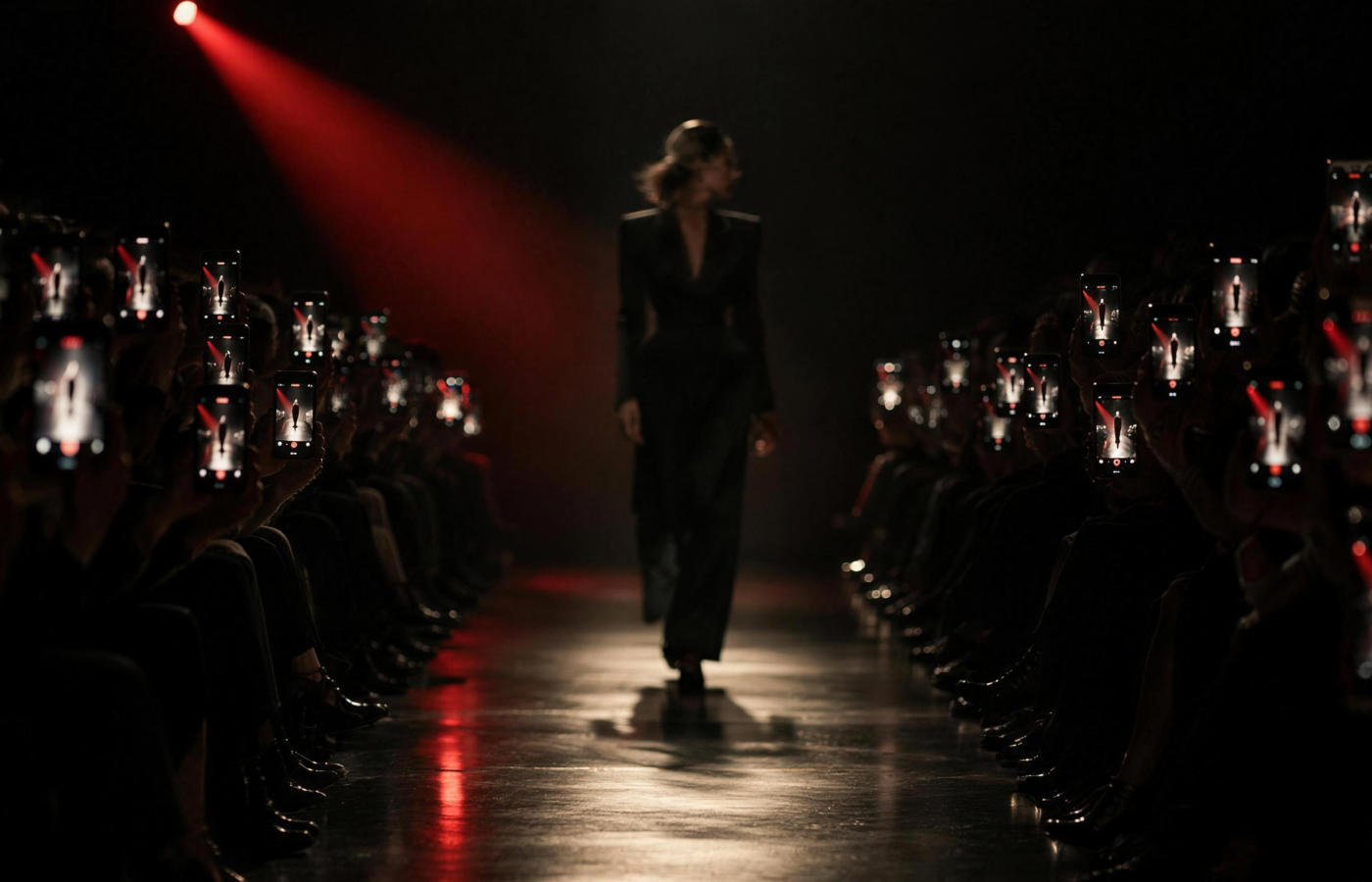
A two-part Reel from Shandeia, a working model who posts as @shandeeeezy, opens with a title card that doesn’t leave room for debate: influencers and celebrities have officially ruined NYFW.
Her case is the one every agency model already knows by heart. Years of castings, measurements, rejection, portfolio rebuilds, and the slow work of becoming someone a production can trust. Then a person with a large following steps onto a major runway with little or no modeling behind her. In Shandeia’s telling, that person isn’t participating in Fashion Week. She’s occupying a position a working model earned. The second part goes after the people who cast her: the designers and casting directors making the call.
The delivery is profane and built to be shared. It’s also aimed at a real question the industry keeps stepping around.
When a designer casts an influencer or a celebrity, the brand isn’t choosing the best person to present the clothes. It’s buying access to that person’s audience.
Influencers didn’t ruin Fashion Week. Fashion Week became a media buy.
The runway was always a distribution deal
Fashion Week has never been for the people in the room. Nobody spends that kind of money on a twelve-minute show for two hundred seats. The show exists to reach buyers, editors, photographers, stylists, and anyone else who can carry the collection out of the building and into the culture.
What changed is who does the carrying.
For decades a small group of publications, television programs, and insiders controlled the public’s view of the runway. Designers presented. Models wore. Editors and photographers translated it for everyone else, weeks later, on their own schedule.
Social media cut that chain. A person sitting front row, or walking in the show, now delivers images and video to hundreds of thousands of people before the last look clears the runway. That audience has a price, and brands know it.
If one recognizable person generates more press, reposts, and search than an entire cast of unknown models, a marketing department notices. From that point on, the person wearing the garment isn’t just presenting it. She’s the publication, the distribution channel, and the campaign, all on one body.
This is a Creative Member article. Join 360ism Network to unlock every premium lesson, download, real-numbers case study, and class recording — plans start at $12/month.
Become a member → · Already a member? Sign in

Sign in or join free to leave a comment.